

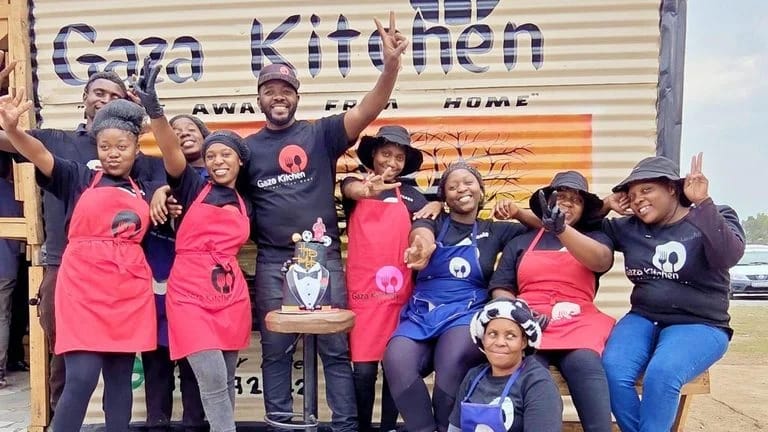
A township entrepreneur in Soweto is showing how a simple food business can grow into a profitable enterprise by combining traditional cuisine, community support and a strong local identity.
Philani, popularly known as “Manager Philani”, is the founder of Gaza Kitchen, a traditional eatery and entertainment space based in Freedom Park, Soweto. The business has attracted customers with its hearty meals and distinctly local menu.
What makes Gaza Kitchen particularly interesting is that Philani built the restaurant’s wooden dining structure himself, without outside assistance. Rather than starting with a large commercial premises, he developed a business around food that is familiar and popular within the community.
The menu includes traditional favourites such as beef stew, Mkokoroxi, steak and wors, pork trotters, chicken dust and mopani worms. The restaurant attracts local residents as well as people attending events and customers looking for home-style meals.
From a township eatery to a six-figure monthly business
According to a recent Facebook video highlighted by Daily Investor, Philani said Gaza Kitchen generates more than R5,000 in sales per day. If that level of turnover is maintained over 30 days, it would amount to roughly R150,000 in monthly revenue.
Importantly, this figure represents revenue rather than necessarily being Philani’s personal profit. Expenses such as food ingredients, staff, electricity, transport, equipment and other operating costs would need to be deducted before determining the business’s actual profit.
The entrepreneur is also looking beyond his existing location. Gaza Kitchen has invested in a large mobile kitchen, which could allow the business to take its food to events and enter the catering market.
This expansion could provide another source of income while allowing the brand to reach customers outside Freedom Park.
Business success with a community focus
Philani has also used his growing business platform to support people in his community.
He is known for collecting old clothes using his green Smart car and distributing them to disadvantaged people. He has also been raising money to help provide wheelchairs to people with disabilities in Soweto who cannot afford them.
His approach demonstrates how township businesses can operate not only as commercial ventures but also as community-focused enterprises.
The bigger township economy
Gaza Kitchen is part of South Africa’s much larger informal and township economy, where entrepreneurs create businesses serving local demand despite often having limited access to traditional financing and commercial infrastructure.
Informal-economy expert GG Alcock has estimated that South Africa’s informal economy could be worth between R1 trillion and R2.3 trillion, highlighting the significant economic activity taking place outside the formal corporate sector.
Researchers have similarly argued that the informal economy provides livelihoods for millions of South Africans and can play an important role in inclusive economic growth.
The story of Gaza Kitchen illustrates the potential of identifying a local market, offering products customers already understand and building a business gradually.
For aspiring entrepreneurs, Philani’s journey also highlights an important lesson: a business does not necessarily need a large starting budget or sophisticated premises to begin generating meaningful sales. A strong product, consistent demand, determination and the ability to reinvest can provide a foundation for growth.
With its move into mobile catering, Gaza Kitchen now has an opportunity to transform its successful township restaurant into a broader food and events business.